Choosing the Right Crypto Timestamp and Price Source
Last updated: October 21, 2026
Quick Answer: use one time zone and one price source for the whole file, and keep them consistent across every transaction. For How to choose the right time zone and pricing source for crypto records, that consistency is the main control that keeps a dataset aligned.
Key Takeaways
- Pick the time zone that fits the legal or operational source, then keep it fixed across the dataset.
- Keep the source record in its original form.
- Choose one price source that fits the record’s purpose and use it consistently.
- A record can look polished and still be wrong if one setting changes.
Crypto records are only useful if the timestamp and pricing source match the job you need them to do. This guide is for anyone cleaning up exchange exports, wallet history, or spreadsheet records and trying to make two calculators produce the same market value, exchange rate, and date cutoff. It is information, not financial advice; for your own tax or reporting situation, speak with a qualified adviser.
Who this is for, and what you need first

This applies to people who already have at least one crypto transaction record and need to decide which time zone, timestamp, and price feed to use so the market value comes out the same across tools. It assumes you know the asset, the exchange or wallet, the transaction date shown by the platform, and the currency you report in, such as USD, EUR, or GBP.
It is not for someone trying to work out tax rules from scratch. It also is not the right page if you need to calculate gain or loss, choose a liquidation calculator, or decide whether a portfolio tracker is better than a profit calculator. Those are different questions. This page is for the settings that sit underneath those calculations.
Two terms matter here. A timestamp is the recorded date and time of the trade or transfer. A price feed is the source that supplies the asset’s value at that moment, often from an exchange, an index, or a market data vendor. If those two settings differ between tools, the result can diverge even when the trade itself is identical.
The cleanest approach is to pick one time zone and one pricing source before you start fixing records. That keeps date cutoffs, exchange rate conversion, and fair market value from drifting between spreadsheets and calculators. It is also the right moment to link your cleanup work to a broader process, such as the hub on crypto transaction records and data cleanup, so the same conventions are used everywhere.
How do I choose the right time zone for crypto records?
Choose the time zone that matches the record’s legal or operational source first, then keep it fixed across every transaction in that dataset. That is usually the exchange’s recorded local time, the blockchain block time converted into a chosen zone, or the tax authority’s required reporting zone if your filing rules specify one.
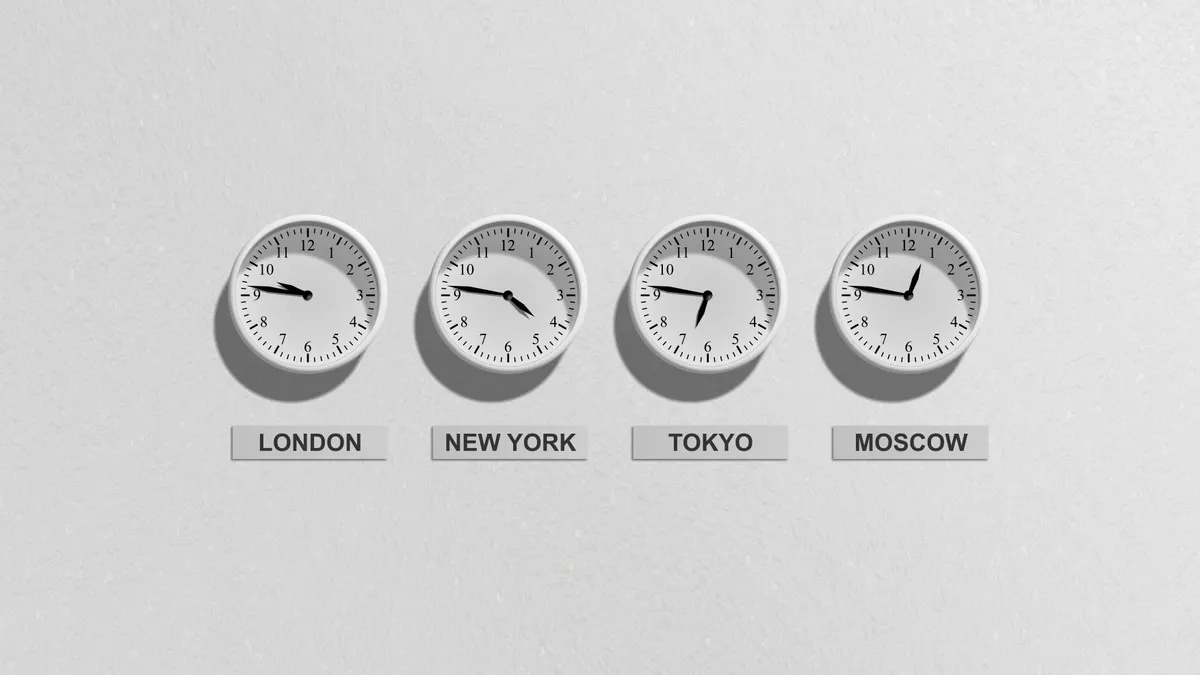
The point is consistency, not convenience. A trade at 23:30 in one zone can become the next calendar day in another, which changes the date cutoff and can move the transaction into a different tax period or reporting bucket. If one calculator uses UTC and another uses your local time, the numbers may disagree even though the raw trade data is the same.
How to do it, step by step
-
Collect the source record in its original form. Save the exchange export, wallet CSV, API dump, or block explorer entry before editing anything. Verify that each line shows a trade ID, asset, amount, and timestamp. If the timestamp is missing or only shows a date with no time, that is a problem because same-day ordering can become ambiguous.
-
Identify the native time zone of the source. Check whether the platform records times in UTC, exchange local time, or your account locale. Many exchanges display a local time in the interface but export UTC in CSV. Verify the footer, help page, or file header. If the source does not say, treat the timezone as unknown until you confirm it with the platform documentation or a qualified adviser.
-
Choose one reporting time zone and write it down. Use a single standard for the whole file, such as UTC or the tax reporting zone your adviser expects. Do not mix zones by exchange, wallet, or calendar month. Verify that the chosen zone makes every transaction land on the expected calendar date. If one row shifts to the prior or next day unexpectedly, the conversion rule is wrong.
-
Convert every timestamp using the same rule. Apply a uniform conversion method, such as ISO 8601 with explicit offsets, rather than manual time guesses. ISO 8601 is the date-time standard that includes the offset, such as
2026-04-15T14:30:00Z. Verify that the exported file shows the offset or a clear zone label. If some rows are plain local times and others are UTC, the file is inconsistent. -
Pick one price source for the whole dataset. Use the same price feed for every trade unless a regulation, contract, or system rule requires a different source. A common choice is the exchange’s own market data feed or a recognized index used by the calculator. Verify whether the source prices by the exact timestamp, by candle close, or by minute bucket. If one tool prices at the nearest minute and another at the exact second, the market value can differ.
-
Match the pricing currency to the reporting currency. If the asset is priced in BTC on one platform but your records need USD or EUR, check the exchange rate path the tool uses. Verify whether the calculator converts asset-to-quote currency first and quote-to-reporting currency second. If the tool hides the conversion chain, you may not be able to reproduce the result later.
-
Document the date cutoff rule for each transaction type. Decide whether the cutoff is trade execution time, order fill time, or settlement time, then apply that rule everywhere. Verify that deposits, withdrawals, and transfers are not being treated like trades, and consult a qualified adviser or the platform’s tax guidance if the classification affects your filing. If a transfer is priced like a sale, the result is wrong even if the timestamp is right.
-
Reconcile one sample transaction end to end. Pick a single trade and compare its timestamp, time zone, price source, exchange rate, and market value in two systems. The results should match within the same rounding rule, such as to 2 decimal places in fiat or the smallest unit the platform uses. If they do not, stop and compare the settings line by line before fixing the whole file.
-
Lock the convention and apply it to every new record. Write the time zone, price source, and cutoff rule in a note at the top of the spreadsheet or export folder. Verify that future imports inherit the same settings. If the convention is not written down, someone will change it later and break comparability.
What price source should a crypto calculator use?
The best available price source is the one that matches the record’s purpose and stays consistent across the whole file. For crypto records, that usually means a recognized market data source that gives a timestamped price, not a vague “current price” pulled at random later.
The wrong move is to mix sources. If one trade uses an exchange’s last trade price and another uses a broad index, the records will not line up. The same problem appears when one tool uses spot price at the exact second and another uses the minute close. For fair market value work, the source choice matters as much as the asset price itself.
A good source should answer three questions: what exchange or index supplied the data, what currency it is quoted in, and how it handles thin trading. If a coin trades lightly, an index may be less noisy than a single venue; if the platform itself sets a transaction value, the venue price may be the right record. The correct choice depends on the reporting rule, so if the rule is unclear, ask a qualified adviser rather than guessing.
What to check before you trust the number
Before you trust a calculated result, check the timestamp conversion, the time zone label, the price feed, the exchange rate, and the rounding rule in the same file. A record can look polished and still be wrong because one setting changed.
Here is a short checklist that catches most mismatches:
- Does the timestamp show a date, time, and zone offset?
- Does the price source name an exchange, index, or vendor?
- Is the quote currency the same across all rows?
- Is the market value derived from the same second, minute, or candle close?
- Are deposits, withdrawals, and internal transfers labeled differently from buys and sells?
- Does the export show the same date cutoff in both calculator views?
If one answer is no, the record needs correction before it can be compared with another system. The common failure is not a math error; it is a settings mismatch. A calculator can be perfectly accurate and still disagree with another calculator because the inputs were framed differently.
For records used in tax or accounting work, keep the source file and the transformed file together. That way, if a reviewer asks why a trade appears on one day in UTC and another in local time, the reason is visible in the audit trail. If the original source is gone, the result is harder to defend.
When standard guidance does not apply
Standard guidance breaks down in a few specific cases, and those cases change how you choose the time zone or price source.
Trades spanning midnight in different zones: A record near midnight may fall on a different calendar date after conversion. That affects day-based cutoffs and reporting periods. In that case, keep the original timestamp, the converted timestamp, and the zone label in the record.
No reliable exchange timestamp: If the exchange export only gives a date, not a time, the transaction cannot be anchored precisely. That means any exact price feed may be approximate. Use the platform’s own record if it exists, and otherwise flag the item for manual review.
Thinly traded tokens: When the asset has low liquidity, a single venue price can be distorted. A broad index or vendor feed may be more representative, but only if the reporting rule allows it. The trade-off is that an index may not match the venue where the order filled.
Stablecoins and pegged assets: Even when a token is intended to track a fiat currency, its market value can still vary slightly around the peg. Do not assume the nominal peg is the same as the record value. Check the source that your calculator uses for the exact timestamp.
Cross-exchange transfers: A transfer from one wallet to another is not the same as a sale, even if some tools display it with a value. If the pricing source is applied incorrectly, the file can show artificial proceeds. That needs a transaction-type review, not just a timestamp fix.
The mistakes that break matching records
The most common mistake is mixing UTC and local time in the same file. The consequence is a shifted date cutoff, which can move a trade into the wrong reporting day. The fix is to convert everything to one named zone and keep it there.
Another mistake is using the wrong price source for one row and the exchange’s default for the rest. The consequence is a market value mismatch that looks like a rounding error but is really a source mismatch. The fix is to pick one feed and apply it to every comparable record.
A third mistake is pricing at the wrong moment, such as using order placement time when the system needs fill time. The consequence is that the value can differ from the actual transaction value. The fix is to identify the event the record is meant to represent.
A fourth mistake is ignoring the quote currency. A BTC/EUR record converted to USD through a second tool can drift if the exchange rate source differs. The fix is to record the currency path, not just the final number.
A fifth mistake is treating every wallet movement like a taxable event or every taxable event like a transfer. The consequence is corrupted records that no amount of timestamp cleanup can repair. The fix is to classify the transaction type before applying price data, and consult a qualified adviser or the relevant tax guidance if the classification affects your filing.
Does time zone affect crypto tax calculations?
Yes, it can affect the timing and date of the record, which can change how a transaction is grouped for reporting. The time zone itself does not change the trade, but it can move the timestamp across midnight or across a filing cutoff. That is why the same event can appear on different calendar dates in different tools.
The practical rule is to use one time zone consistently and to follow the reporting rule that applies to your jurisdiction. Different countries, platforms, and calculators can handle date cutoffs differently, so a single universal setting does not exist. If the record affects tax filing, ask a qualified adviser to confirm the correct treatment for your situation and check the applicable tax authority guidance.
Does time zone affect crypto tax calculations?
What price source should a crypto calculator use?
It should use the source that matches the reporting rule and stays consistent across the full dataset. That may be an exchange feed, a market index, or another timestamped data source, but it should not change from row to row without a reason. If the source is unclear, the result is not reliable enough for comparison.
How to set the correct date for a crypto trade
Set the date from the transaction event that the reporting rule recognizes, then convert it with one fixed time zone. For most records, that means using the fill or execution timestamp, not the order time, and preserving the original timestamp alongside the converted one. If the export has only a date with no time, mark it for manual review.
Related guidance
For deeper setup and cleanup, see crypto transaction records, data cleanup, and liquidation calculator. For pricing and valuation context, review market value, exchange rate, and fair market value.
Drafted with AI; not yet reviewed by a person.