Crypto portfolio tracker vs profit calculator: which one do you need?
Last updated: September 10, 2026
Key Takeaways
- I write about personal finance and crypto record-keeping because the hard part is rarely the token chart.
- The choice between a crypto portfolio tracker and a profit calculator looks minor—until crypto gets messy, which it usually does.
- Use a crypto portfolio tracker if your main job is watching, not reconciling.
- That matters because crypto ownership is fragmented by design.
- Quick answer: in most cases, the crypto portfolio tracker vs profit calculator decision comes down to one number — one gives you a live view of holdings, while the other gives you a realized gain or loss figure.
A crypto portfolio tracker shows what you own now; a profit calculator works out what a trade or wallet has made or lost. If your task is to keep tabs on holdings across exchanges, wallets, and tokens, the tracker is the better fit. If your main question is “Did this trade make money, after fees and basis?” the calculator handles that more cleanly. For taxes or reporting, check the rules in your country and, if needed, consult a qualified adviser. This is information, not financial advice.
I write about personal finance and crypto record-keeping because the hard part is rarely the token chart. It is the ledger, the tax lot, the transfer history, and the number you can defend later. In 2024, the IRS kept virtual currency in its top-tier guidance, and HMRC’s cryptoassets manual stayed active as well.
The difference that actually matters
What does the tracker answer? A living question: what is my position right now? The calculator answers a closed one: what was my profit or loss on this transaction or set of transactions?
That gap sounds tiny until real crypto chaos shows up. A portfolio tracker usually pulls in exchange and wallet data, follows balances over time, and displays allocation, performance, and unrealized gains. A profit calculator usually starts with entries and exits, then subtracts fees, sometimes gas, and sometimes uses a cost-basis method such as FIFO or specific identification, depending on the tool and the jurisdictional rules it supports. The IRS, for example, treats crypto as property in Publication 544, while HMRC applies separate cryptoasset guidance in the UK.
Breadth is where a tracker shines. Precision is where a calculator does. Move assets between a cold wallet, a centralized exchange, and a DeFi protocol, and the tracker keeps the map straight. Sell one BTC lot in April and want the gain figure for that sale? The calculator is the sharper tool. One April sale can be clear in a calculator even when three wallets still need reconciliation in a tracker. Clean math. Messy map.
The most common mistake I see is treating them as substitutes, so check your country’s rules and, if the records matter for taxes, consult a qualified professional. They overlap, but they are not the same product class. A tracker can show a gain estimate without being reliable enough for tax reporting. A calculator can be excellent at profit math and still be useless for day-to-day portfolio management because it may not show allocation drift, watchlists, or multi-wallet totals.
Which one should I use if I want to keep an eye on my holdings?
Use a crypto portfolio tracker if your main job is monitoring, not reconciling. It wins for anyone who holds more than a couple of coins, uses more than one exchange, or wants to see total exposure across spot wallets, staking positions, and sometimes NFTs or DeFi positions. In a 2024 Chainalysis estimate, global crypto adoption was still measured in the hundreds of millions, which helps explain why multi-account tracking is now common.
Aggregation is the real advantage here. A good tracker pulls balances into one view, usually with wallet and exchange connections, and it may let you tag wallets, separate accounts, and follow performance over time. That matters because crypto ownership is fragmented by design. Without a tracker, many people end up checking three apps, a browser wallet, and a spreadsheet just to answer a basic question.
Its weakness is simple: “portfolio value” is not the same as a clean accounting record. A tracker can miss transfers, double-count bridge movements, or show a gain number that looks precise but is not ready for filing. The result is a familiar trap—it can make you feel organized before you actually are. In practice, a $10,000 dashboard can still hide one unmatched transfer.
This is the better choice for:
– People with multiple wallets or exchanges
– Investors who rebalance
– Anyone who wants to watch unrealized gains, allocation, or exposure
– People who need a single dashboard more than a tax figure
Not the right tool if your only goal is to prove realized profit on a specific sale. In that case, the tracker is extra surface area, not extra clarity. Many trackers also depend on reliable exchange APIs and wallet address matching; if your data imports are messy, the dashboard can look neat while the underlying lots stay unresolved. Live view and filing view are cousins, not twins.
Which one should I use if I need to know whether I made money?
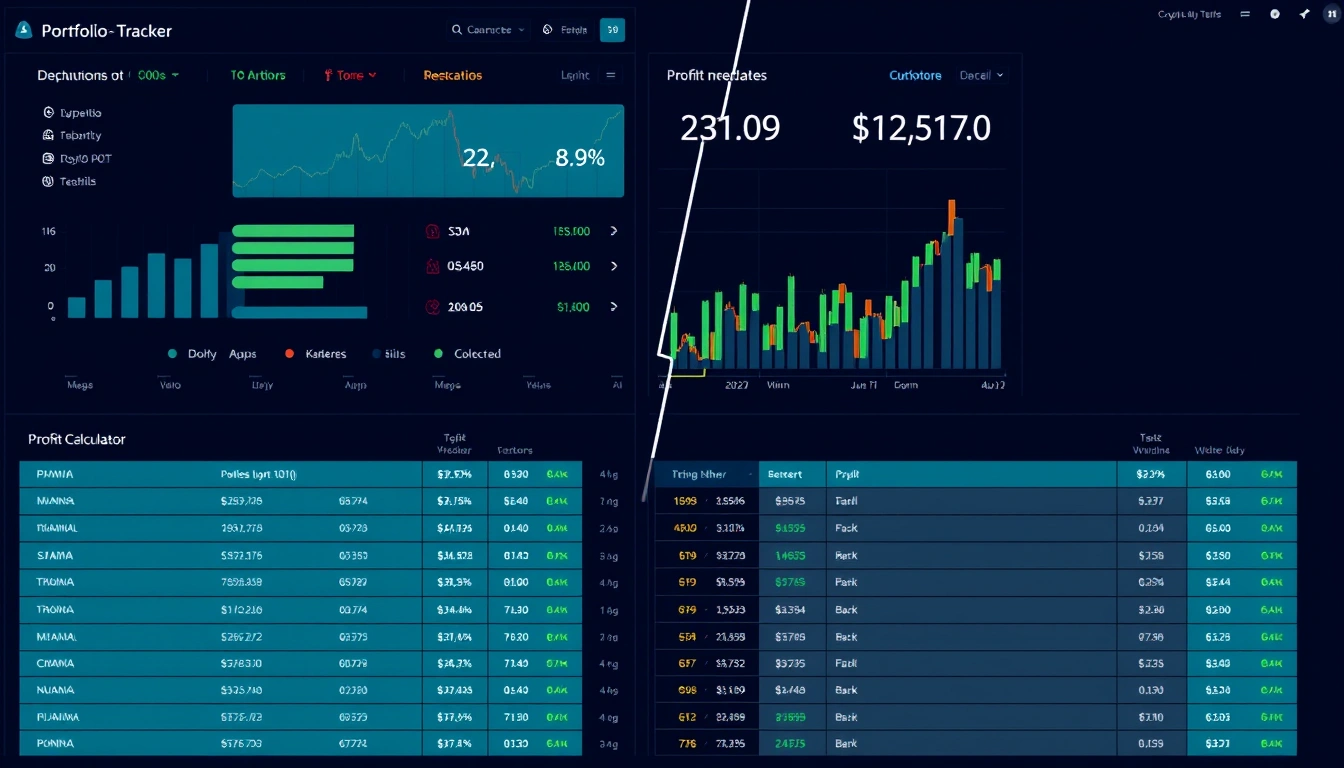
Use a crypto profit calculator when your main question is realized profit or loss on a trade, swap, or set of disposals. It wins for tax-season sorting, performance checks on individual trades, and situations where you need a transaction-level answer instead of a dashboard. A single transaction result is easier to verify than a full portfolio snapshot.
Specificity is the calculator’s edge. It is built to process entry price, exit price, quantities, fees, and sometimes network costs. Some tools also handle cost basis methods such as FIFO or average cost, though those rules vary by country and even by asset class. That variation matters. A calculator can only be as useful as the accounting method and jurisdiction it supports. For instance, the same trade can be reported differently under FIFO and average cost rules.
Scope is the trade-off. A calculator often cares more about the transaction than the portfolio. It may not show you whether your total BTC exposure is too high relative to ETH, stablecoins, or cash. It may not help you spot that you have the same token on three chains. If your holdings are active, a calculator alone can become a pile of isolated answers. A $250 gain on one sale does not tell you whether the rest of the book is balanced.
This is the better choice for:
– People who already know which transactions they need to analyze
– Traders who want realized gain or loss summaries
– Anyone cleaning up records before handing them to an accountant
– Users who care more about disposals than portfolio visualization
Wrong tool if your problem is basic oversight. If you are trying to understand your whole book at a glance, a calculator solves the wrong part of the problem. It can also be misleading if you do not know whether the tool handles fees, token migrations, or chain bridges the way your records require. In short, it is a narrow tool for a narrow question.
The side-by-side that makes the choice obvious
So the split is simple: the tracker wins on ongoing oversight; the calculator wins on transaction math. Here is the practical comparison.
| Criteria | Crypto portfolio tracker | Profit calculator | Winner for [condition] |
|---|---|---|---|
| Main job | Shows current holdings and performance | Computes realized gain/loss | Tracker for live oversight |
| Best use case | Multi-wallet visibility | Sale-by-sale or trade-by-trade math | Depends on the question |
| Handles ongoing balances | Usually yes | Usually limited | Tracker for current net worth |
| Handles tax lots / cost basis | Sometimes, but not always deeply | Often the main feature | Calculator for filings |
| Multi-exchange aggregation | Common feature | Sometimes absent or narrow | Tracker for fragmented accounts |
| Fee and gas treatment | Varies by product | More central to the tool | Calculator for precision |
| Allocation / concentration view | Usually strong | Usually weak | Tracker for diversification checks |
| Realized vs unrealized focus | Often both, but dashboard-first | Realized first | Calculator for disposed assets |
| Ease for a beginner | Easier if they just want a dashboard | Easier if they need one number | Tracker for simple monitoring |
| Risk of false confidence | Gains can look tidier than they are | Inputs can be incomplete, so outputs can be wrong | Neither if records are messy |
That table points to the real split: one tool is built around visibility, the other around accounting. Keep one thing in mind: a portfolio tracker helps you ask better questions; a profit calculator helps you answer a narrower one. Watching a position is not the same as calculating a disposal. Not even close.
Crypto portfolio tracker vs profit calculator: which one do I need for taxes?
Taxes are where the numbers bite, so a profit calculator is usually the closer fit—but only if it supports your country’s rules and your exact transaction history. If your filings need realized gains, a calculator is usually the more direct path. If your records are incomplete, a tracker can still help you reconstruct balances and identify missing transfers, but it is not the same thing as a tax report.
This is where people get into trouble. Tax treatment for crypto differs by country and changes often, so check the current guidance and consult a qualified tax professional. Some places care about specific identification, others about FIFO or average cost, and some treat staking, airdrops, or DeFi events differently. A calculator that does not match your local rules can produce a neat number that is not the right number. The IRS and HMRC both publish crypto guidance, but neither replaces local advice.
The calculator wins when your main task is accounting by transaction. The tracker wins when your main task is data cleanup before accounting. If you have dozens or hundreds of disposals, the calculator can save time by turning records into a structured summary. If you have duplicate imports, missing exchange histories, or wallet transfers that never got matched, the tracker can be the better starting point.
My view is blunt: do not use a portfolio dashboard as a substitute for tax logic. And do not use a profit calculator without checking whether it understands the way your country defines gains, basis, and taxable events. That is the difference between a useful estimate and an unreliable filing aid. For U.S. readers, the IRS virtual currency page is the place to start; for UK readers, HMRC’s cryptoassets manual is the counterpart.
For reliable background, I would point you to the IRS virtual currency guidance if you are in the United States, or to HMRC’s cryptoassets manual if you are in the United Kingdom, plus the guidance of your local tax authority and a qualified adviser. The OECD has also published work on crypto-asset reporting, which shows how quickly the compliance landscape is changing.
The edge cases that flip the answer
A calculator becomes the better first choice in a few narrow situations. If you made a small number of trades but across several exchanges, and you mainly need to reconcile disposal gains, the calculator is the cleaner starting point. If you used one wallet for long-term holding and a separate exchange account for active trading, the calculator can isolate the taxable account more quickly than a broad tracker.
The verdict flips the other way when your data is spread everywhere. If you have wallets on Ethereum, Solana, and an exchange account, plus staking rewards or bridge transfers, the tracker becomes the better first step because it gives you a map before you ask for a number. A map-first approach can save hours when the book spans multiple chains.
There are also cases where neither tool should be your main system. If your activity includes business income, complex derivatives, margin, or cross-border reporting, a consumer tracker or simple profit calculator may be too shallow. The same warning applies if you are trying to recover years of missing records. A spreadsheet, a professional accountant, or both may be the only honest answer, especially when prior-year records are incomplete.
One more exception: if you are not transacting much at all and just hold a tiny position, neither tool may be necessary yet. A basic records folder with wallet addresses, exchange exports, and transaction confirmations can be enough until activity grows. A tool should serve a problem, not create one. In other words, a $100 position does not need enterprise software.
My verdict: which one to choose and why
Choose a crypto portfolio tracker if your current problem is seeing everything you own in one place, across multiple wallets or exchanges, with allocation and unrealized performance. Choose a profit calculator if your current problem is pinning down realized gain or loss on specific transactions, especially for tax prep or reconciliation. Neither if your records are too incomplete to trust, or if your situation is complex enough that a qualified tax professional needs to shape the accounting method first.
That is the cleanest split I can give you. The tracker is the better everyday tool. The calculator is the better accounting tool. If you are only going to use one, pick the one that matches the question you need answered this month, not the one that sounds more comprehensive. A daily dashboard and a filing report solve different jobs.
What people usually miss before they decide
Because the hidden issue is data quality, both tools are only as good as the imports you feed them. Exchange CSVs, wallet addresses, token swaps, and bridge transactions can break either system if they are incomplete or mislabeled. So the real decision is not just “tracker or calculator?” It is “which question comes first in my workflow?” A clean import on day one can prevent a lot of cleanup later.
A tracker is the better first layer if you need to find missing assets and see the whole picture. A calculator is the better first layer if you already have the full transaction list and only need the numbers. That is why many serious users end up using both, but not for the same task. One is for visibility; the other is for calculation.
Another thing readers often miss: a “profit” figure and a “portfolio value” figure are not interchangeable. One is about realized change. The other is about marked-to-market value. A portfolio can look up while a specific sale shows a loss, and that is not a contradiction. A $1,000 gain in a dashboard can still coexist with a $300 realized loss on one disposal.
Questions people ask before they pick one
Can a portfolio tracker calculate profit?
Yes, many trackers show gain and loss, but that does not make them a substitute for a dedicated profit calculator. The gain view in a tracker is often designed for monitoring, not jurisdiction-specific accounting. For tax work, check the tool against your local rules.
Does a profit calculator show my whole portfolio?
Usually not in a useful way. It is mainly built to process transactions, basis, and realized results, not to give you a complete live snapshot across wallets and exchanges. It is a calculator, not a dashboard.
Which one is better for DeFi?
A tracker is usually better for watching positions across chains and wallets, while a calculator is better when you need a transaction-level result. For DeFi-heavy activity, many people need both, because bridges, LP positions, and rewards create more bookkeeping noise. That is especially true when rewards arrive on different dates.
Do I need both?
If you trade often or use multiple wallets, very possibly yes. If you hold only a small amount in one place, neither may be necessary yet. A single wallet with a few transactions can stay manageable without extra software.
Can either one replace an accountant?
No. They can organize data, but they do not replace advice tailored to your country, filing status, or transaction history.