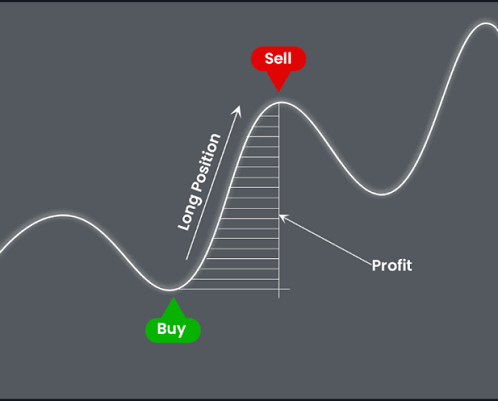
Crypto Profit and Loss Formula for Long and Short Positions
Last updated: September 10, 2026
Key Takeaways
- Spot crypto keeps the quantity simple: 0.25 BTC, 2 ETH, 500 XRP, and so on.
- Example: entry at $40,000 and exit at $43,000 means a $3,000 move per BTC.
- Held 0.25 BTC? Then $3,000 × 0.25 = $750 gross profit before costs.
- Buy 2 ETH at $2,500 and sell at $2,700. Clean and plain.
Table of Contents
- What the formula is really measuring
- How do I calculate crypto P&L for a long position?
- What is the short position formula in crypto?
- Step-by-step examples: spot, margin, and perpetual futures
- What should I check before I trust the number?
- When should I stop and ask for qualified help?
- The mistakes people make with crypto P&L
- What if the trade is not a plain spot long or short?
Need the crypto profit and loss formula for long and short positions? Here it is: for a long, profit or loss is usually (exit price − entry price) × quantity; for a short, it is usually (entry price − exit price) × quantity. Straightforward. But crypto adds extra moving parts — fees, funding, liquidation risk, and the fact that “quantity” can mean coins, contracts, or dollar value depending on the venue.
This is information, not financial advice. Rules, tax treatment, and contract specs vary by country and platform, so check a qualified adviser or tax professional for your own setup and review the exchange or regulator guidance, such as the IRS crypto tax FAQ and your venue’s contract specs.
What the formula is really measuring
At its core, the formula captures the price move in your trade result. It does not give you the whole account picture. A long position gains when price rises after you buy. A short position gains when price falls after you sell borrowed exposure or open a contract that benefits from decline. Same math, different direction. The clean mental model is simple: compare exit to entry, then multiply by exposure.
Spot crypto usually keeps the quantity easy: 0.25 BTC, 2 ETH, 500 XRP, and so on. Derivatives are messier. Quantity may be listed in contracts or in notional value. Notional value means the dollar value of the position, not the margin you posted. That difference matters because margin can back exposure larger than the cash you deposit when leverage is involved; see the CFTC’s overview of leveraged trading and your exchange’s contract specifications.
A lot of generic writeups blur the numbers and call everything “profit.” That is sloppy. In practice, you need to separate:
– Gross P&L: the raw gain or loss from price movement.
– Net P&L: gross P&L minus trading fees, funding, and sometimes borrow costs.
– Realized P&L: what is locked in after closing a trade.
– Unrealized P&L: what exists on paper while the trade is still open.
One thing to keep in mind: the sign logic never changes. A higher exit than entry helps a long and hurts a short; a lower exit helps a short and hurts a long. Simple. Brutal, too.
How do I calculate crypto P&L for a long position?
For a long position, use (exit price − entry price) × quantity, then subtract fees and any financing charges. Positive result? Profit. Negative result? Loss.
On paper or in a spreadsheet, I would handle it this way:
- Write down the entry price exactly. Use the executed average price, not the headline quote. Bought 0.8 ETH in two fills at different prices? Record the weighted average entry price to 2 decimal places or better. Verify the fill price from the trade ticket. Using the chart price and ignoring slippage is the trap here.
- Record the quantity in the correct unit. For spot, this is usually coin amount, such as 0.50 BTC. For contracts, it may be contract count or notional size. Verify the contract specification before calculating. Mixing BTC amount with USD notional can throw the answer off by a factor of 10 or 100; check the venue’s specs or ask a qualified professional if the unit is unclear.
- Record the exit price from the actual close. Sold in stages? Use the weighted average exit price across all fills. Verify the average from your order history. Using the execution price alone is not enough.
- Compute the price move. Subtract entry from exit: exit − entry. Example: entry at $40,000 and exit at $43,000 means a $3,000 move per BTC. Verify the sign is positive for a winning long and negative for a losing long. Flip the subtraction, and the result flips with it.
- Multiply by quantity. If you held 0.25 BTC, then $3,000 × 0.25 = $750 gross profit before costs. Verify that the multiplication uses the same unit throughout. Using the wrong size after adding or reducing the position is an easy way to distort the result.
- Subtract fees. Include maker/taker fees on both entry and exit, and any withdrawal or conversion fee that belongs to that trade. Verify the fee currency and fee amount on the exchange statement. Leaving fees out makes net profit look bigger than it is.
- Add or subtract funding and borrow costs if the trade used leverage or derivatives. Funding payments can be positive or negative depending on the contract and period; borrow costs may apply to margined shorts on some platforms. Verify the funding ledger or financing statement for the exact amounts. Treating a leveraged long like spot and ignoring carrying cost is a classic miss; check platform disclosures or ask a qualified adviser if you are unsure.
- Check the final sign. Positive net number means gain; negative number means loss. Verify that taxes, if relevant in your country, are handled separately from trade P&L unless your adviser says otherwise. Don’t confuse taxable gain with cash still available to withdraw.
Buy 2 ETH at $2,500 and sell at $2,700. Gross P&L is ($2,700 − $2,500) × 2 = $400. Pay $12 total in fees, and net P&L becomes $388 before any tax treatment. Same structure, whether the trade lasts 5 minutes or 5 months. That part never gets fancy.
What is the short position formula in crypto?
For a short position, the basic formula is (entry price − exit price) × quantity, then subtract fees, funding, and borrow costs. A short makes money when the market price falls after you enter, because you can close cheaper than you opened.
The mechanics can differ, though the sign logic stays the same. In a margin short, you may borrow the asset, sell it, and later buy it back. In a futures short, you may not borrow the coin itself; settlement happens against contract value instead. Same answer, different plumbing. Messier, but manageable.
Here is the clean way to calculate it:
- Shorted at $50,000 and covered at $47,000? The move is $3,000 per BTC in your favor.
- Shorted at $50,000 and covered at $53,000? The move is −$3,000 per BTC against you.
- Multiply by your quantity or contract size.
- Then subtract every cost tied to the position.
One trap is forgetting that a short can have uncapped loss in theory if price rises sharply, especially with leverage. That is why the formula alone does not tell you whether the trade was manageable. It only tells you how to measure the result after the fact. Harsh, but true.
The usual writeup also skips the asymmetry in execution. Shorts can face borrow availability, borrow fee changes, liquidation thresholds, and funding charges that a plain long may never touch. Those costs can turn a small price win into a net loss. I would not call a short “just the same formula reversed” without checking the funding table and liquidation rules on the specific venue.
Step-by-step examples: spot, margin, and perpetual futures
Want to see the difference clearly? Run the same price move through three common setups.
Spot long
Buy 1 BTC at $60,000 and sell at $63,000.
Gross P&L = ($63,000 − $60,000) × 1 = $3,000.
If total fees are $90, net P&L = $2,910.
Margin short
Short 0.5 BTC at $60,000 and buy back at $57,000.
Gross P&L = ($60,000 − $57,000) × 0.5 = $1,500.
If borrow and trading costs total $110, net P&L = $1,390.
Perpetual futures short
Short a perpetual contract with $10,000 notional exposure and close after a 3% decline.
Gross P&L is about 3% of notional, or $300, before funding and fees. The exact contract math depends on whether the market uses linear USDT-margined contracts or inverse coin-margined contracts. That detail matters because inverse contracts can express profit in the base coin, not in dollars.
If all you know is the market moved, you still do not know your P&L until you know:
1. your entry and exit,
2. your exposure size,
3. the contract type,
4. fees,
5. funding or borrow costs.
A candle chart screenshot? Not enough. Not even close.
What should I check before I trust the number?
Check the execution details, the contract spec, and the cost ledger before trusting any crypto P&L number. Leave out one of those pieces, and the result can be slightly wrong or wildly off.
Start with the trade history. You want the exact fill price, fill time, and filled quantity, not the order you meant to place. Then check whether the market was spot, margin, perpetual futures, or dated futures. A perpetual futures contract is a derivative with no expiry date, and it commonly uses funding payments to keep its price near the spot market. If your venue charges funding every 8 hours, that schedule can matter even for a short holding period; the exact interval varies by platform.
Next, see whether the position was fully closed or only partly reduced. Sold half and still hold half? You have both realized and unrealized P&L. Then scan the ledger for extra items:
– maker or taker fees,
– conversion fees if you changed quote currencies,
– funding payments,
– margin interest,
– borrow fees for short sales,
– liquidation fees if the trade was force-closed.
I would also check the price quote convention. Some pairs are quoted in USD, some in USDT, some in another stablecoin, and that can matter in volatile or stressed conditions. The same goes for contract multipliers. One exchange may treat 1 contract as 1 USD of exposure; another may use a fixed coin amount per contract. Get the multiplier wrong, and the answer goes sideways fast.
If the position was large enough to matter for taxes, keep the records separate from tax assumptions. Tax rules differ by country and can depend on holding period, income classification, and whether the trade was spot or derivative. That is exactly where a qualified tax adviser earns their fee.
When should I stop and ask for qualified help?
Stop and get qualified help when the trade structure is no longer a simple buy-low/sell-high or sell-high/buy-low calculation. In finance, one wrong assumption can wreck a neat formula.
You used leverage above 1x: leverage changes liquidation risk and cost structure — ask a qualified adviser or the platform for the exact margin and funding rules before treating the P&L as complete.
You traded a short in a margin account: borrow fees and share-lending style mechanics may apply — confirm the borrow statement, because missing it can turn a paper gain into a net loss.
You are on an inverse futures contract: the profit may be settled in the base coin, not the quote currency — use the exchange’s contract specification, not a generic USD formula.
You have partial fills across multiple prices: the simple single-entry formula no longer describes the trade — calculate a weighted average entry and exit, or use the venue’s realized P&L report.
You are trying to report tax: the calculation method may differ from your trading P&L method — consult a tax professional, since jurisdiction rules can change and may treat derivatives differently from spot trades.
The exchange shows liquidation or auto-deleveraging: the position may have been closed under rules you did not choose — do not rely on your own back-of-envelope math; use the official statement.
I’m drawing the line here on purpose. The formula works when the trade terms are plain. Once derivatives, tax reporting, or forced closure enter the picture, the “simple” answer can be the wrong answer.
The mistakes people make with crypto P&L
The biggest mistake is using the chart instead of the fill. In thin markets, that can move the answer a little or a lot. The fix is simple: use the executed average price from the trade history.
Another common miss is forgetting that fees are paid twice, once on entry and once on exit. A 0.10% fee on each side is not one fee; it is two separate debits. Sum every fee line attached to the trade. Easy to overlook. Easy to pay for.
A third mistake is confusing quantity with notional. A 0.2 BTC trade is not the same thing as a $10,000 notional derivative position. Confirm the contract specification and unit size before multiplying anything.
A fourth mistake is assuming shorts work like long positions with the sign flipped and nothing else. That leaves out borrow costs, funding, and liquidation rules. Treat the short formula as the starting point, not the whole calculation.
A fifth mistake is ignoring currency conversion. If your account is in EUR but the trade settles in USD or USDT, you may need a second conversion step. The result can look right in one currency and wrong in your reporting currency. Calculate in the settlement currency first, then convert using the relevant rate at the proper time.
What if the trade is not a plain spot long or short?
The standard formula needs modification for three common edge cases. First, if you