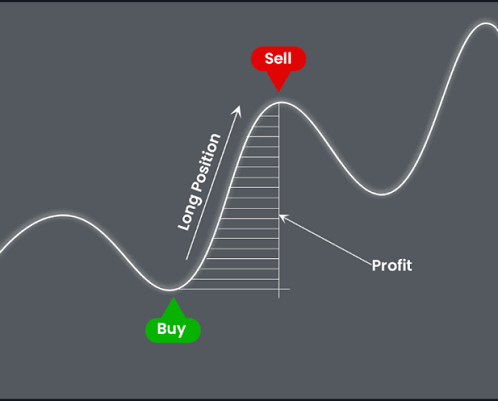
Crypto realized vs unrealized profit: what the difference means
Last updated: September 10, 2026
Key Takeaways
- Sell it, and the gain becomes real. Keep $5,000 more cash than you put in? That is realized profit.
- Think of it this way: buy 1 ETH for the equivalent of $2,000, then later sell it for the equivalent of $2,700.
- Buy 0.5 BTC for the equivalent of $15,000, and if that holding is worth $22,000 today, the $7,000 difference stays unrealized profit until you dispose of it.
- Tax treatment can differ for realized and unrealized profit, so consult a qualified tax adviser and check your local rules. IRS HMRC
What this means, and who needs to care

Realized profit is the gain you have actually locked in by selling, swapping, or otherwise disposing of a crypto asset. Unrealized profit is the paper gain sitting on something you still hold. If your Bitcoin is up $5,000 on an exchange screen but you have not sold, that gain is unrealized. If you sell it and keep $5,000 more cash than you put in, that gain is realized.
This matters for tax tracking, cash planning, and portfolio risk — especially if you move between coins often. Not just bookkeeping. Different treatment, different risk, different decisions. And sometimes the chart looks better than the wallet. So consult a tax professional for your situation. IRS HMRC
This article is information, not financial advice. Tax rules differ by country and change often, so a qualified tax adviser or financial adviser should be consulted for your own situation. IRS HMRC
Traders who rotate positions, long-term holders with large paper gains, and anyone using crypto as collateral or part of a broader balance sheet need the clearest grip on this. If you only check prices occasionally and never dispose of crypto, unrealized profit is the main number you are seeing. Sell or swap regularly, and realized profit becomes the figure that usually matters most for tax reporting and cash available to spend. See also our crypto tax guide, capital gains basics, and how crypto taxes work.
I am going to use the term cost basis a lot. It means what you paid for the asset, including fees in many tax systems, though exact treatment varies by jurisdiction, so consult a tax professional or local authority for the rule that applies to you. IRS No cost basis, no real profit picture.
What is realized profit in crypto?
Realized profit is the gain that becomes final when you dispose of an asset. In crypto, “dispose” often means selling for fiat, swapping one coin for another, or sometimes spending crypto on goods or services, depending on local tax rules. The core idea is plain: compare what the asset cost you with what you received when you got rid of it.
A practical way to think about it is:
- Buy 1 ETH for the equivalent of $2,000.
- Later, sell that 1 ETH for the equivalent of $2,700.
- Your realized profit is $700 before any taxes or transaction costs, assuming your cost basis and proceeds are those amounts.
Trading fees or other allowable costs can reduce that $700 in some jurisdictions, but the exact treatment depends on local law. A tax authority may also treat swaps differently from sales. In the United States, for example, the IRS treats crypto as property, and disposal events can create taxable gain or loss; HMRC in the UK also treats disposals as taxable events under its cryptoasset rules. Those are not universal rules. IRS HMRC
Realized profit is no longer theoretical. It has left the screen and entered your recordkeeping. That is why realized gains often show up in tax forms, accountant worksheets, and year-end summaries. Use a crypto exchange, a wallet tracker, or a tax app, and the realized number is usually tied to transaction history, not just market price. See our crypto portfolio tracker and wallet transfer guide.
There is a trade-off many generic articles skip: realized profit is easier to spend, but realizing gains can trigger tax consequences even if you plan to reinvest. “Up” is not the same as “cash in hand.” A trader with a lot of realized gains and little cash may still owe tax on gains they no longer physically hold, depending on local law and timing.
What is unrealized profit in crypto?

Unrealized profit is the gain you would have if you sold now, but have not sold yet. It is the difference between your cost basis and the current market value of the asset you still hold. People often call it a paper gain because it exists on paper, not in settled cash.
Suppose you bought 0.5 BTC for the equivalent of $15,000 and today that holding is worth $22,000. Your unrealized profit is $7,000. Crypto prices move constantly, so that figure can change minute by minute. If Bitcoin drops 10% overnight, the unrealized profit can shrink fast without any action from you.
Useful? Yes. Safe? Not quite. Unrealized profit has a built-in weakness: it can vanish before you act. Sounds obvious, yet people still make planning mistakes around it. They mentally spend gains that have not been locked in. They also forget that unrealized gains are not always taxable until disposal, but exceptions exist and rules vary by country. Some tax systems have special treatment for staking rewards, derivatives, airdrops, or business inventory. A single blanket rule is the wrong mental model. IRS HMRC
This is why I treat unrealized profit as a risk signal, not a bank balance. It tells you what your position is worth right now, but not what you have secured. If you are borrowing against crypto, using margin, or relying on a holding to pay a future bill, the unrealized number is fragile. A 15% move in either direction can change the picture quickly, and crypto regularly makes moves far larger than that over short periods.
One more detail people miss: unrealized profit depends on the valuation method. If you hold several lots bought at different times and prices, your “paper gain” can change depending on whether your records use first-in, first-out, specific identification, or another method allowed by your jurisdiction. Not a footnote. It can change the number materially.
How do I calculate realized vs unrealized profit?
Start with cost basis, then compare it with either proceeds from a disposal or current market value if you still hold the asset. Whether the position has been sold, swapped, or spent is the whole difference.
Here is the practical sequence I would use:
- List each acquisition separately. Record the date, asset, quantity, fiat value, and fees for every buy, swap-in, or reward receipt. A spreadsheet with one line per lot is enough. Verify that each line has a source transaction hash or exchange trade ID. If a lot is missing its entry price, your profit number will be unreliable.
- Decide your cost basis method. Use the method your tax jurisdiction allows, such as specific identification or FIFO, if applicable. FIFO means first in, first out: the earliest acquired units are treated as sold first. Verify the method before you calculate anything. If you mix methods without permission, your report may not match your filings.
- Identify the disposal event. Mark the exact trade, sale, swap, or spend that ended ownership. Include network fees and exchange fees where your local rules treat them as part of proceeds or costs. Verify that the transaction is truly a disposal. If it is only a transfer between your own wallets, it may not be a realization event, though recordkeeping still matters.
- Compute realized profit for that lot. Subtract cost basis from proceeds. For example, if a lot cost $1,200 and the disposal proceeds are $1,650, the realized profit is $450 before tax. Verify the sign: a negative result is a realized loss, not a profit.
- Mark the remaining holdings to market for unrealized profit. Multiply current quantity by current market price from a consistent source at a specific timestamp, such as end-of-day or the time you opened the report. Verify that you are using the same price source across the whole portfolio. If one asset uses a noon price and another uses a live quote, the comparison is distorted.
- Subtract the remaining lot cost basis from current value. For each unsold lot, current value minus cost basis equals unrealized profit or loss. Verify each lot independently. A single average price can hide a large gain in one lot and a loss in another.
- Separate profit from cash flow. A realized profit of $800 is not the same as $800 of spendable cash after taxes, exchange withdrawal delays, or locked funds. Verify whether any proceeds are still pending. If settlement has not cleared, you do not yet have final control over the funds.
- Check the total against your records. Sum realized gains and losses across all closed lots, then compare the result with your exchange report, tax software export, or accountant worksheet. A mismatch usually means a missing fee, a duplicate transfer, or the wrong cost basis method. If the numbers differ by more than a small rounding error, stop and reconcile before filing or planning.
The most useful output is not a single headline number. It is three numbers: realized profit, unrealized profit, and total cost basis still at risk. That gives you a clearer view of what has been locked in, what remains exposed, and what might matter for taxes.
Why the difference matters for taxes, planning, and risk
The difference matters because realized and unrealized profit are not interchangeable in either cash terms or tax terms. Realized profit usually creates a completed gain or loss event. Unrealized profit usually does not, until you dispose of the asset. That is the broad pattern in many jurisdictions, but the details are local and can change. IRS HMRC
For tax planning, the timing of realization can change what year a gain appears in and whether a loss can offset other gains, subject to local rules. Some tax systems have wash sale rules in traditional securities; crypto treatment is not identical everywhere, and some countries have no wash sale rule for crypto at all. Broad internet advice gets wobbly fast here. A reader in Canada, the UK, or Australia may face different reporting and timing rules than a reader in the United States. See our crypto tax deadlines and capital gains calculator.
For portfolio planning, unrealized profit can make a position look stronger than it is. A 40% paper gain can disappear in one sharp move. If your plan depends on that gain to fund a purchase next month, you are assuming price stability that crypto rarely offers. Realized profit reduces that uncertainty because it has already moved into proceeds, though tax claims may still reduce what you keep.
For margin, lending, or collateralized positions, unrealized gains can also be misleading because exchanges or lenders may apply their own valuation and liquidation rules. A paper gain in your dashboard does not necessarily protect you from a sudden drawdown if the platform marks collateral differently or at a faster interval than you expect. That is a place where a 5% or 10% move can matter more than the gain itself.
I would treat realized profit as the number that answers, “What have I actually secured?” and unrealized profit as the number that answers, “What could change before I do?” Those are not the same question, so they should not produce the same decision.
Common mistakes people make with crypto profit
The most common mistake is treating unrealized profit like spendable money. The consequence is simple: price drops can erase the paper gain before you act, and any tax due on realized gains may still arrive on schedule. Better to separate “paper gain” from cash available after disposal and tax.
Another mistake is ignoring fees. Exchange fees, network fees, and spread costs can reduce realized profit, sometimes by enough to matter on frequent trades. If you only compare buy price to sell price, your numbers are too neat. The correct approach is to include all transaction costs your local rules and records require.
A third mistake is mixing up transfers with disposals. Moving BTC from one wallet you control to another wallet you control is usually not a sale, but it still creates a record-keeping task. If you label every transfer as a profit event, your records become useless. The right alternative is to log transfers separately and only mark actual disposals as realized.
A fourth mistake is using the wrong price source or time. Crypto prices differ across exchanges and move by the second. A mid-day quote from one exchange and a closing price from another can give you a misleading unrealized figure. The safer alternative is to pick one consistent source and timestamp, then use it throughout the report.
A fifth mistake is forgetting that different lots have different bases. If you bought the same asset three times at three prices, a single average can hide a gain in one lot and a loss in another. That can distort taxes and risk management. Specific lot tracking is the better choice when your jurisdiction allows it.
A sixth mistake is assuming unrealized gains are untaxed everywhere and always. That is too broad. Some events, such as staking income, airdrops, business inventory treatment, or derivatives, may be handled differently. The correct move is to check the specific category with a tax adviser or your tax authority before you rely on a generic rule.
When does the standard answer not apply?
The standard answer needs adjustment when your crypto activity is not a simple buy-and-hold position. Trade on margin, use perpetual futures, earn staking rewards, or receive crypto as business income, and realized and unrealized profit can interact with other rules in ways a basic calculator will miss.
Multiple acquisitions of the same coin: If you bought the same asset in several lots, your realized profit depends on the lot method, not just the average price — use FIFO or specific identification only if your jurisdiction allows it and your records support it.
Swaps instead of sales: If you trade one token for another, many tax systems treat that as a disposal event — record the fair market value at the time of the swap and do not assume only fiat sales count.
Staking, rewards, or airdrops: These can create income-like events or special basis rules — do not fold them into ordinary buy/sell math without checking the local treatment.
Wallet transfers across your own accounts: These usually do not create realized profit, but they can break your cost basis trail if you fail to match source and destination — preserve transaction hashes and timestamps.
Illiquid tokens or thin order books: The screen price may overstate what you could actually realize — use caution with unrealized profit because the displayed quote may not reflect executable proceeds.
Derivatives, options, and perpetuals: These are not the same as spot holdings — realized and unrealized gains can arise from funding, settlement, or mark-to-market rules that require separate treatment under many jurisdictions, so consult a professional. IRS
Bottom line
Realized profit is what you have locked in, while unrealized profit is what you may still lose or convert later. If you want a clean view of your crypto position, track both, keep your cost basis records accurate, and check the rules that apply where you live.