Trading tools and position sizing — The Complete Guide
Last updated: September 10, 2026
Key Takeaways
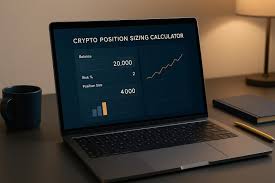
- Suppose your trading account is $20,000 and your max planned loss on one trade is $200.
- If your entry is $50.00 and your stop is $48.50, the risk is $1.50 per share before costs.
- If fees and slippage may add 10 cents per share, your effective risk is about $1.60.
- Dividing $200 by $1.60 gives 125 shares before rounding and any other constraints.
A $20,000 account and a $200 loss cap tell the whole story fast: one oversized trade can punch a hole in the plan. Trading tools and position sizing — the complete guide — shows how to avoid that. In practical terms, you start with a fixed dollar risk, then use charts, order tickets, and calculators to turn it into shares, contracts, or lots. This guide is for self-directed traders who already understand basic order types, have a live or paper trading account, and want a repeatable way to size trades using charts, risk limits, and a calculator instead of guesswork. This is information, not financial advice; your own situation may call for a qualified adviser.
Who this guide is for — and who should do something else
A trader who already knows the difference between a market order, a limit order, and a stop-loss order is the audience here. So is anyone who can read a chart, spot an entry price, and define an exit point before clicking “buy” or “sell.” You should also be comfortable with a spreadsheet, a broker platform, or a simple position-sizing calculator. Easy enough? Good.
I am not writing for someone who is still deciding whether day trading, swing trading, or long-term investing is the right path. Nor is this for someone whose cash flow is unstable, who may need trading money for bills within 3 to 6 months, or who has no written plan for losses. In those cases, the first problem is not the tool; it is the account structure.
“Trading tools” is broader than a charting app. It covers the order-entry panel, watchlists, news feeds, earnings calendars, economic calendars, volatility measures such as Average True Range (ATR, a range-based volatility indicator), and the calculator you use to turn a stop distance into a share count or contract size. Position sizing is the bridge between the idea and the risk. No bridge, no safe crossing.
The biggest mistake is treating sizing like an afterthought. A trader picks an entry, drops a stop “somewhere below,” and then buys whatever number of shares feels right. That can work — once in a blue moon. Good sizing is mechanical. It turns uncertainty into a controlled loss if the trade fails. A generic article usually stops at “manage risk.” That is too vague to help anyone place a real order. For a practical framework, the SEC’s investor guidance on risk and the CME’s contract specifications are useful starting points.
Some situations need qualified help rather than a DIY process. Using margin, options, leveraged exchange-traded products, or multi-currency accounts changes the math; the same goes for trading tied to taxes, business income, or retirement accounts with country-specific rules. And if a loss would affect rent, debt payments, or family obligations, consult a qualified professional before sizing up. The sizing method still matters, but the surrounding limits deserve a second look.
What trading tools actually do for position sizing
Three numbers matter here: entry, stop, and account risk. Trading tools make position sizing possible by putting those numbers on the same screen before execution. A charting package like TradingView, a broker platform such as Interactive Brokers’ Trader Workstation or thinkorswim, or a plain spreadsheet can all do the job if they display price, volatility, and order parameters clearly.
Position size is not “how much I like this trade.” It is “how many units can I take so that my planned loss stays inside my limit.” If you decide that one trade may risk 1% of your trading capital, then every setup must be translated into units based on the distance between entry and stop. A $2 stop on a 100-share position creates a very different dollar risk from a 50-cent stop on the same number of shares. FINRA’s margin and risk resources are a useful reference for how quickly exposure can change.
Here is where tools matter. A chart that shows ATR on a 14-period setting can help you avoid putting a stop inside normal noise. A risk calculator can convert that stop distance into a share count. An order ticket can show whether the order is a bracket order, meaning an entry with attached stop-loss and take-profit orders. A journal can record whether you followed the plan.
Treating tools as prediction machines is the trap. They are not. A moving average, RSI (Relative Strength Index), or volume profile does not tell you how much to risk. It helps you define the trade and estimate where your invalidation point lives. Sizing comes after that. If you are unsure how a specific indicator is used, consult a qualified professional or the platform’s educational material before basing risk on it. Otherwise, you are guessing at the wheel.
I would separate tools into four jobs:
- Selection tools: screens, scanners, news, and calendars.
- Definition tools: charts, levels, ATR, trendlines, and volume.
- Execution tools: order tickets, hotkeys, bracket orders, and alerts.
- Control tools: calculators, journals, and risk dashboards.
If a tool does not clearly support one of those jobs, it is probably noise. A $50 monthly subscription to a platform is useful only if it reduces execution errors or gives you faster access to the information you actually use. A flashy feature set is not the same thing as a better sizing process.
How do I size a trade before I place it?
Fix the account risk first, then calculate the number of shares, contracts, or units that fit that risk after accounting for your stop-loss distance and any fees or slippage. That sequence keeps the loss bounded. Reverse it, and you are guessing.
Use this workflow every time:
- Set the account risk for the trade. Decide the maximum dollar amount you are willing to lose if the stop is hit. Many traders use a fixed fraction of equity, but the exact level depends on account size, volatility, and personal tolerance. Verify that this amount is small enough that one loss does not change your next trade. If you cannot state the number in dollars or account currency, the problem is not ready to size.
- Define the invalidation point. Mark the price level where the trade idea is wrong, not just where you feel uncomfortable. For a breakout, that may be below the breakout level or the most recent swing low. For a mean-reversion trade, it may be beyond the edge of the range. Verify that the stop is tied to market structure, not to an arbitrary round number. If the stop is wider than the setup can reasonably support, the trade may not be suitable.
- Measure the stop distance. Subtract the stop price from the entry price for a long trade, or the reverse for a short trade. In markets with wide spreads or fast movement, add a buffer for slippage. Verify the distance in the instrument’s price units: dollars per share, index points, ticks, or pips, depending on the market. If you cannot express the stop distance cleanly, the instrument may be too complex for your current method.
- Convert price risk into unit risk. Multiply the stop distance by the contract multiplier or point value where relevant. A futures contract, for example, has a fixed dollar value per point that changes the calculation completely. Verify the per-unit risk before you size up. If you skip the multiplier, you can be off by a large factor.
- Divide account risk by unit risk. Divide the maximum dollar loss by the risk per share, contract, or unit. Round down, not up. Verify that the resulting size still leaves room for commission and slippage. If the number is zero or too small to be practical, the setup may not fit the account.
- Check portfolio concentration. Make sure the position does not duplicate risk you already have in correlated assets. Two technology stocks can move together; two energy names can respond to the same commodity shock. Verify total exposure by theme, sector, currency, or macro factor. If one event can damage several positions at once, your size is too large even if the single-trade formula looks fine.
- Attach the exit orders before entry when possible. Use bracket orders or an OCO structure, meaning one-cancels-the-other. Verify that the stop-loss is live and in the correct direction before the order is sent. If the platform cannot hold both orders cleanly, manual execution becomes more error-prone.
- Record the trade plan in your journal. Write the entry, stop, size, planned risk, and reason for the trade. Verify the journal matches the order ticket after execution. If you cannot reproduce the sizing decision later, you will not learn from it.
A simple example makes the logic visible. Suppose your trading account is $20,000 and your max planned loss on one trade is $200. If your entry is $50.00 and your stop is $48.50, the risk is $1.50 per share before costs. If fees and slippage may add 10 cents per share, your effective risk is about $1.60. Dividing $200 by $1.60 gives 125 shares before rounding and any other constraints. The exact number will vary by broker, market, and order type, but the method does not.
The part people miss is that position sizing is not only arithmetic. It is also a consistency check. If the math spits out a size that feels too large, the stop may be too tight. If it produces a size so small that the trade barely matters, you may be forcing a weak setup into the account. Either way, the fix is often to change the trade, not the calculation.
Which tools belong in a sizing workflow?
The right tools are the ones that reduce errors in entry, stop placement, and exposure tracking. A polished interface is not enough. Honestly, the best option is often the one that keeps your numbers visible and hard to misread.
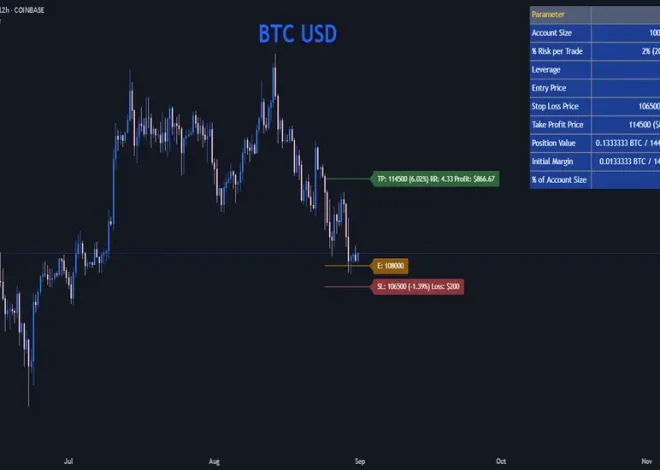
A charting tool should let you mark the entry, stop, and target on the same screen. I look for clean price ladders, adjustable timeframes, and a way to overlay ATR or volume. A brokerage platform should show buying power, margin impact, and open orders without hiding them behind several menus. A calculator should handle the instrument you trade, not only plain shares. For futures, forex, and options, that means contract size, pip value, tick value, or delta-based exposure, depending on the market.
Here is how I would think about the main tool categories:
- Charting platform: useful for structure, volatility, and invalidation. It should support horizontal levels, trendlines, and at least one volatility measure such as ATR(14). If the chart is cluttered, you will place stops by emotion instead of structure.
- Risk calculator: useful for converting stop distance into size. A spreadsheet works if you can edit it without breaking formulas. A broker-supplied calculator is fine if it is transparent about commissions and contract multipliers.
- Order-entry platform: useful for attaching stops and managing exits. Bracket orders, stop-limit orders, and OCO orders matter here. If your platform makes you enter these manually every time, your error rate will rise.
- Journal: useful for tracking whether your actual risk matched your planned risk. A good journal has fields for entry, stop, size, setup type, and reason for exit. Without that record, you are guessing about your own discipline.
- Exposure dashboard: useful if you hold several positions. It helps you see whether you are effectively doubled up on one currency, one sector, or one factor.
A generic article usually says, “Use a good platform.” That is not enough. I think a platform is only good if it makes the sizing step harder to forget. For some traders, that means a simple spreadsheet with locked formulas. For others, it means a broker ticket that auto-calculates size after the stop is entered. Either way, the tool should reduce ambiguity.
There is a cost side to this too. A platform that charges a monthly fee may be worthwhile if it saves execution mistakes, but it is not automatically superior. A free charting site can be enough for a disciplined swing trader. An expensive terminal can be wasted on someone who still sizes by feel. The right choice is the one that matches your actual process, not your aspiration. For current pricing, compare your broker’s platform page, TradingView’s plan tiers, and the exchange data fees that apply to your market.
What mistakes in position sizing cost the most?
The priciest mistakes are oversized positions, ignored correlation, and stop placement that is too tight for the instrument’s normal movement. Those errors turn a normal loss into a damaging one. They are not abstract; they show up as larger drawdowns, forced liquidation, or a string of avoidable stop-outs.
Oversizing because the setup “feels right”: This means emotion replaced the formula — your loss can exceed the amount you planned, sometimes by several multiples if the market gaps through your stop. The correct alternative is to cap risk in dollars first and size down when the chart tempts you to size up.
Placing stops inside normal noise: This means the stop sits too close to price structure or inside the instrument’s usual range — the trade may be stopped out before the idea has room to work. The correct alternative is to use structure plus volatility, often with ATR or recent swing points, rather than a fixed tiny buffer.
Forgetting contract multipliers or pip value: This means the position size is based on the wrong unit — a futures or forex trade can become much larger than intended. The correct alternative is to calculate per-unit risk in the instrument’s actual dollar terms before any order is sent.
Ignoring correlation across positions: This means several trades can lose together even if each one is sized “correctly” on its own — the portfolio loss can be much larger than expected. The correct alternative is to review exposure by sector, currency, theme, and event risk before adding a new trade.
Moving the stop farther away after entry: This means the original risk limit is no longer real — the trade now has a larger possible loss than planned. The correct alternative is to treat the stop as part of the trade thesis; if the market invalidates the setup, exit or reassess according to your written rules.
Skipping fees and slippage: This means your real loss is larger than the model — especially in fast markets, small accounts, or thinly traded instruments. The correct alternative is to add a buffer for transaction costs and to avoid sizing at the absolute edge of your limit.
A common hidden cost is decision fatigue. If you must recalculate everything from scratch on every trade, you will eventually cut corners. A spreadsheet with fixed fields, or an order ticket template, lowers that burden. The exact format matters less than the consistency.
I would be especially cautious with leveraged instruments. Margin can make a small market move feel like a large account move. That does not make leverage bad by itself; it makes precision non-negotiable. If the calculation depends on a number you do not fully understand, the trade is not sized yet.
When should I stop and ask for help?
Stop and get qualified help when the trade structure, account structure, or tax treatment is complex enough that a sizing mistake could create consequences beyond a normal trading loss. In money matters, “I think I understand it” is not enough if leverage, derivatives, or cross-border rules are involved.
You are using margin and do not understand the maintenance requirements: This means a decline can trigger a margin call or forced liquidation — speak with your broker’s support team and, if the account is significant, a qualified adviser before trading size increases.
You are trading options and cannot explain delta, gamma, and assignment risk: These are terms that govern how option exposure changes with price and time — avoid sizing until you have clarity from a licensed professional or a platform education desk, because the position can behave differently from the stock behind it.
You hold positions across multiple currencies: This means your real risk is shaped by exchange rates as well as the underlying asset — confirm the currency exposure and, if needed, get guidance from someone who understands cross-currency accounting and taxation.
Your account is inside a retirement plan or tax-advantaged wrapper: This means trading rules, contribution limits, and tax consequences vary by country and account type — review the account rules with a qualified adviser before placing trades that depend on rapid turnover or derivatives.
A single loss would affect rent, debt, or living expenses within 3 to 6 months: This means the account is carrying life-critical money — reduce exposure and get a personal financial review before continuing, because trading capital should not be mixed with near-term obligations.
You cannot define a stop based on market structure: This means the trade thesis is not concrete — do not size the trade yet; either refine the setup or leave it alone.
Your platform does not support the order type you need: This means you may not be able to enforce the exit you planned — use another platform or manual management only if you fully understand the execution risk, which often means the position should be smaller.
The right response is not always “do not trade.” Sometimes the better move is “simplify the instrument, reduce the size, or get a second set of eyes.” But if the issue is structural, not tactical, forcing a trade is the wrong move.
For rules and technical definitions, I would also look to authoritative sources such as the U.S. Securities and Exchange Commission’s investor materials, the Financial Industry Regulatory Authority’s margin resources, or the CME Group’s contract specifications for the instrument you trade. Those sources are not advice, but they do anchor the terminology.
What changes in edge cases and special markets?
Edge cases change the sizing math because the instrument’s unit of risk is not a plain share price. The standard “entry minus stop” formula still works in spirit, but the conversion step changes.
For futures, the key number is the contract’s tick value and multiplier. A 1-point move in an index future is not the same as a 1-point move in a stock. You need the exchange’s contract specification, not a guess. If the platform hides that data, open the contract details before sizing. The