Crypto Profit and Loss Calculation Fundamentals — The Complete Guide
Last updated: September 10, 2026
Key Takeaways
- Buy 2 units of a token for 1,000 in your reporting currency, then add a 20 fee.
- Later, sell those same 2 units for 1,300 and pay a 15 fee.
- A 30-day window appears in some systems, but that date range is not universal.
- Under rules that treat the fee as reducing proceeds, the realized gain is 1,285 minus 1,020, or 265. Still, confirm the treatment with a qualified tax professional and official guidance such as IRS Pub. 544 and HMRC Cryptoassets Manual CG78300.
Crypto profit and loss calculation fundamentals — complete guide means turning wallet history, exchange history, and fee records into one answer: what did you actually gain or lose, and what does that mean after taxes and reporting rules? This guide is for people who already have trades, swaps, transfers, staking rewards, or airdrops on their record and need a defensible way to calculate results. It assumes you can read a transaction list, identify cost basis, and separate deposits from taxable disposals. Cross-border reporting, derivatives, margin, business income, and anything a tax authority treats specially are a different beast; get qualified advice for your country before you lean on a spreadsheet. Official guidance from the IRS, HMRC, and the OECD’s Crypto-Asset Reporting Framework can help, but local rules still control. Information only. Not financial advice. Your own tax adviser should confirm what applies to your situation.
What profit and loss really means in crypto

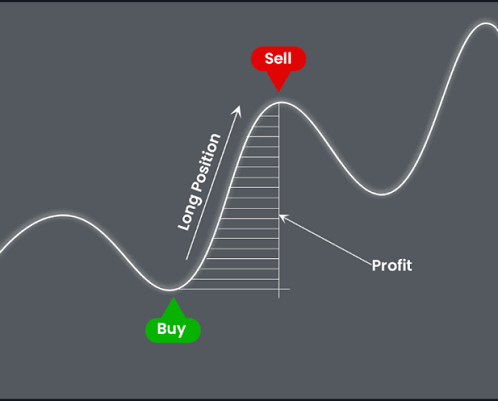
Crypto profit and loss calculation fundamentals — complete guide starts with a plain idea: crypto profit and loss is the gap between what you gave up and what you got back, after fees and in the correct unit of account. Simple on paper. Messy in real life. A swap from ETH to USDC, a token-to-token trade, a sale for cash, a staking reward, and a transfer between your own wallets are not the same thing at all. Only some create realized profit or loss, which means a gain or loss locked in by a taxable or reportable disposal. Unrealized profit or loss is just the paper change while you still hold the asset.
The first trap is relying on market value alone. Buy 0.5 BTC, watch it rise, and the economic gain is still not realized until you dispose of it or trigger a realization event under local rules. The second trap is forgetting fees. Exchange trading fees, network fees, and spread costs can move the result more than people expect. The third trap is mixing units. USD, EUR, GBP, and your local currency are not interchangeable; tax reporting usually wants one base currency. I’d anchor everything to the local reporting currency and translate each taxable event at the time it happened, but confirm that conversion rule with a qualified tax professional and your tax authority’s guidance.
For each taxable event, you need four pieces: date and time, asset, quantity, and fair market value in the reporting currency. Then comes cost basis — the amount you originally paid for the asset, adjusted for allowable fees under your local rules. The gain or loss is usually:
Proceeds – Cost basis – Relevant fees = Realized gain or loss
That formula is the skeleton, not the whole body. In some places, different cost-basis methods are allowed; in others, they are not. FIFO, short for first in, first out, means the earliest units acquired are treated as the first units sold, but you should confirm that method with local guidance or a tax adviser. Specific identification means you can point to the exact lots you disposed of if your records and local rules permit it. Average cost is another method in some jurisdictions and for some assets, but not everywhere.
I would not use a generic “crypto profit calculator” as the source of truth. It can help with arithmetic, sure, but it cannot decide whether airdrops are income, whether gas fees are deductible, or whether a transfer is really a disposal in your country. That is where a lot of people stumble. A calculator is only as good as the classification behind it.
How do I calculate crypto profit and loss step by step?
You calculate crypto profit and loss by classifying every transaction, assigning cost basis, converting values at the correct time, and then summing realized gains and losses across the period. The method below works for a single wallet or for a long history spread across multiple exchanges, as long as your records are complete enough to reconstruct each event. Speed is not the point here; consistency is.
- Collect every transaction source for the full tax year. Export CSV files from exchanges, wallets, and custodians, and include deposits, withdrawals, trades, swaps, staking payouts, airdrops, and fees. Use the exact date range from 1 January to 31 December if your country uses the calendar year, or the local tax year if it does not. Check that every source has timestamps, asset symbols, and quantities. A missing CSV, missing token symbol, or a platform that omits network fees leaves holes you may not be able to patch later.
- Choose one reporting currency and one consistent valuation source. Use your local tax currency, such as USD, EUR, or GBP, and apply the same fair market value convention to every taxable event. Many people use the exchange rate or market price at the transaction timestamp; some jurisdictions specify a different method. Verify that the same source and timestamp logic is used across the whole file. If one trade is valued at midnight close and another at the exact block timestamp, your results will not match your own records. For market data, sources such as CoinMarketCap, CoinGecko, or an exchange’s own historical feed can be used if they match your jurisdiction’s rules.
- Separate transfers from disposals. A transfer between wallets you control is usually not a gain or loss event by itself, while a sale or swap usually is. Mark each movement as transfer, taxable disposal, or income event before calculating anything. Check that the outgoing amount equals the incoming amount minus any network fee. If the asset disappears from one wallet and never appears in another, you have either a missing record or a mistaken disposal. Internal wallet movements should be traceable in the ledger, and external transfer records can help reconcile gaps.
- Assign cost basis to each lot. A lot is one acquisition at one time and one cost. Record the acquisition date, quantity, unit cost, and acquisition fees. Under FIFO, the earliest lot gets matched first; under specific identification, you need a traceable record for the exact units. Verify that total remaining cost basis equals the quantity still held. If your inventory goes negative, you have matched more units sold than you ever acquired, which means the ledger is broken. Lot notes belong beside the transaction table, not somewhere you will forget later.
- Convert proceeds and basis into the same currency at the event time. If you bought one asset with another, value both sides in the reporting currency at the time of the trade. The result is the disposal proceeds for the asset you gave up and the cost basis for the asset you received. Verify that the market value source is the same class of source for both sides. If you use an end-of-day price for one side and a live tick for the other, you are building an arbitrary spread into your gain. IRS guidance on digital asset transactions and HMRC’s valuation manuals both emphasize using a consistent valuation approach.
- Include allowable fees in the right place. Trading fees usually reduce proceeds or increase cost basis depending on the transaction type and local rules; network fees may be deductible, capitalized, or ignored depending on jurisdiction. Record fees separately from principal amounts. Verify that fees are not double-counted in both basis and proceeds. If the fee appears once in the exchange export and again in the wallet export, your P&L will be too low or too high by the same amount twice. When in doubt, confirm the fee treatment with a qualified professional because local tax law controls.
- Compute each realized gain or loss line by line. For every disposal, subtract the matched cost basis from the gross proceeds, then adjust for allowable fees. Keep the sign consistent: a gain is positive, a loss is negative, or vice versa if you prefer, but do not mix conventions inside one file. Verify that every disposal has one and only one matched acquisition lot or a documented method for pooled basis. If a sale has no matched basis, the result is incomplete. Chainalysis-style audit trails and exchange lot histories can help verify the line-by-line result.
- Summarize by category and by date. Add realized gains, realized losses, and income-like receipts separately before you combine them into a year-end total. Use at least two checks: one by transaction count and one by quantity balance. Verify that opening holdings plus acquisitions minus disposals equals closing holdings for each asset. If the final balance does not reconcile to the wallet or exchange statement, do not trust the P&L total yet. Crypto profit and loss calculation fundamentals — complete guide only works when the closing balance matches the source records.
A simple example makes the structure clearer. Suppose you buy 2 units of a token for 1,000 in your reporting currency, plus a 20 fee. Your total basis is 1,020. Later you sell the 2 units for 1,300 and pay a 15 fee. If your local rules treat the fee as reducing proceeds, the realized gain is 1,285 minus 1,020, or 265; confirm the treatment with a qualified tax professional and official guidance before filing. If the fee is treated differently in your jurisdiction, the number changes. That is why something that looks obvious can still be wrong.
The point of the step-by-step process is not to make the spreadsheet pretty. It is to make the answer auditable. If you cannot show how a gain was matched to a lot, or how a token was valued at the exact time of disposal, the calculation may be useless when questioned later. Auditability, not just arithmetic. That is the job.
Which transactions count, and which ones do not?

Only taxable or reportable events count toward realized crypto profit and loss, and the line between “counts” and “does not count” depends on the event type and your local tax rules. The generic mistake is to treat every blockchain movement as a gain or loss. That creates false losses on transfers and misses income on rewards.
In most tax frameworks, a plain transfer between wallets you own is not a disposal by itself. You still need to track it because it moves cost basis from one address to another. A trade from one crypto asset to another usually is a disposal of the first asset and an acquisition of the second. A sale to fiat currency is also a disposal. Staking rewards, mining rewards, some airdrops, referral bonuses, and interest-like yields may be taxed as income when received, not just later when sold. NFTs can add another layer because the asset and the platform fee structure may differ from standard fungible-token trades. Crypto profit and loss calculation fundamentals — complete guide requires tagging each event by tax character before you calculate anything.
I would sort every transaction into five buckets before doing arithmetic: acquisition, disposal, transfer, income, or fee. That classification step matters more than any formula. It is also where country-specific differences are sharpest. In some places, wrapping and unwrapping tokens is neutral; in others, it may be treated as a disposal. In some places, a bridge transfer can be a taxable event if a new asset is issued. I cannot flatten that into one rule without giving you bad guidance. For country-specific treatment, consult a tax adviser and authoritative local guidance such as HMRC manuals, the IRS digital asset pages, or your national revenue service.
Here is the practical test I use in my own analysis process: ask whether you gave up ownership of one asset in exchange for another asset or cash. If yes, start thinking about disposal. Ask whether you received value without giving up another asset. If yes, start thinking about income. Ask whether you merely moved the same asset under your control. If yes, start thinking about transfer bookkeeping, not P&L.
A second issue is timing. Many platforms show a transaction on one date and a blockchain confirmation on another. For reporting, the tax point may depend on the platform’s booking rule, the confirmation time, or the timestamp on the blockchain. There is no universal answer. If your records span multiple exchanges, use the rule that your tax authority or adviser says applies, then apply it consistently for the entire year, not case by case.
Finally, some activity should not be forced into ordinary spot-trading P&L at all. Futures, options, margin liquidations, perpetual swaps, and business inventory accounting can follow separate rules. If your activity looks like that, the standard spot calculation is the wrong tool — so get qualified advice before filing.
What are the common mistakes in crypto P&L calculations?
The common mistakes are usually bookkeeping errors, not math errors, and they can distort a return by an entire lot or year. I see five recurring failures in the structure of a file, not because the formulas are hard, but because crypto activity is messy and people try to cut corners on classification. The ledger gets wobbly fast. Crypto profit and loss calculation fundamentals — complete guide becomes unreliable when the records are inconsistent.
-
Mixing transfers with sales. The consequence is phantom losses or gains when you move coins between your own wallets. The correct alternative is to mark transfers as non-disposal movements and carry the original basis forward.
-
Ignoring fees. The consequence is overstated gains or understated losses, especially on smaller trades where a 5 or 10 fee is not trivial. The correct alternative is to record exchange fees, network fees, and conversion fees separately and apply them according to the local rule set.
-
Using one average price for the whole year. The consequence is that your gain on an early sale or loss on a late sale can be badly wrong. The correct alternative is transaction-level pricing or a permitted lot method such as FIFO or specific identification, with one valuation at the time of each event.
-
Failing to track token redenominations, forks, or token migrations. The consequence is broken inventory, because the old asset vanishes and the new one appears without basis. The correct alternative is to map the old lot to the new asset according to the event’s legal and tax treatment in your country.
-
Leaving staking, mining, and airdrops until the end. The consequence is a missing income layer that later makes your capital gains total look too clean. The correct alternative is to tag these receipts on the date received, assign a fair value if required, and then start a second basis record for any later disposal.
-
Changing methods mid-year without records. The consequence is a file that cannot be defended because one set of sales used FIFO and another used specific identification. The correct alternative is to choose one permissible method and apply it consistently unless a tax adviser tells you otherwise.
A hard truth: a neat spreadsheet does not prove a correct calculation. A reconciled ledger does. If your total holdings by asset do not match the exchange statement or on-chain balances after you run the math, the file is not finished. The number that looks cleanest is often the one hiding the mistake. Crypto profit and loss calculation fundamentals — complete guide is strongest when bookkeeping and classification agree.
When should you stop and get qualified help?
You should stop and get qualified help when the transaction pattern moves beyond ordinary spot buys and sells, when the local tax rules are unclear, or when the numbers are large enough that a mistake creates real exposure. This is the part many generic guides skip, and it is the part that matters most.
Multiple countries are involved: You held accounts, wallets, or residency ties in more than one jurisdiction — cross-border tax rules can change the reporting treatment — speak to a tax adviser who handles international crypto reporting before filing, and use OECD/IRS/HMRC guidance as the starting point.
You traded derivatives or used margin: Futures, options, perpetuals, liquidation events, and borrowed funds often follow different gain and loss rules — the standard spot P&L method may understate or misclassify results — get specialist help and confirm the treatment with official guidance.
Your records are incomplete for a full year: Missing CSV exports, deleted accounts, or lost wallet access mean you cannot reliably reconstruct lot history — any calculated P&L may be unstable — pause and rebuild records first.
You received mining, staking, airdrops, or business income: These may be treated as income at receipt and as capital gains later on sale — that is a two-layer calculation — ask an accountant to separate the income and disposal treatment and cite the relevant local rules.
You used a DeFi protocol with wrappers, LP tokens, or bridge transactions: Liquidity pool tokens, wrapped assets, and cross-chain bridges can trigger events that are not obvious from the wallet view — misclassification can be expensive — get a professional to map the sequence.
You are facing an audit, notice, or amended return decision: Once a tax authority is already asking questions, the standard self-prep approach is too risky — keep a clean paper trail and use professional representation.
I would also stop if your activity is substantial enough that one bad assumption changes the filing materially. “Substantial” is relative, but the rule of thumb is simple: if you cannot explain a chosen method in plain language and back it with source records, the calculation is not ready. Qualified help is not a luxury in that case; it is a control. Crypto profit and loss calculation fundamentals — complete guide is only useful when it survives review.
How to handle edge cases without breaking the ledger
You handle edge cases by giving them their own rule set instead of forcing them into spot-trade arithmetic. The standard method still works, but the transaction type dictates how you apply it. This is where many articles go fuzzy, so I want to be specific.
A hard fork can create a new asset where none existed before, but the tax treatment varies by country. Some systems treat the new asset as income on receipt; others treat it as having zero or split basis until you dispose of it. The ledger should record the fork date, the quantity received, and the basis rule you applied. Do not blend the fork into the old coin’s basis without a documented reason.
A token migration, such as moving from one contract to another, may look like a simple swap in the wallet UI. It may not be simple for tax. If the old token is extinguished and the new one is issued, you may have a disposal and a new acquisition. If it is merely a wrapper or a technical update, the answer can differ. That distinction is where the wheels can come off. Record the sequence, the dates, and the basis treatment, then apply the local rule